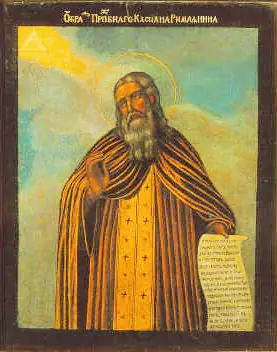
Saint John Cassian was a monk and ascetic writer of the late fourth and early fifth century who transmitted the wisdom of Egyptian desert monasticism to the Latin West. Drawing on years spent among the elders of the East, he composed in Gaul the foundational treatises of Western cenobitic life and founded monasteries at Marseilles.
Born around 360, he entered monastic life at a monastery in Bethlehem, then spent years among the monks of the Egyptian desert. About 399 he came to Constantinople, where John Chrysostom ordained him deacon, and later went to Rome on Chrysostom's behalf, before settling at Marseilles in Gaul, where he founded a monastery for men and one for women.
His principal works are the Institutes, on the life and discipline of monastic communities and the eight principal faults, and the Conferences, recording conversations with the elders of the Egyptian desert. Setting the asceticism of the East before the West, they profoundly shaped later Western monastic rules.
He reposed at Marseilles about 435, and his relics rest in the Monastery of Saint Victor there. Venerated as a saint, he is commemorated in the Orthodox Church on 29 February (28 February in non-leap years).