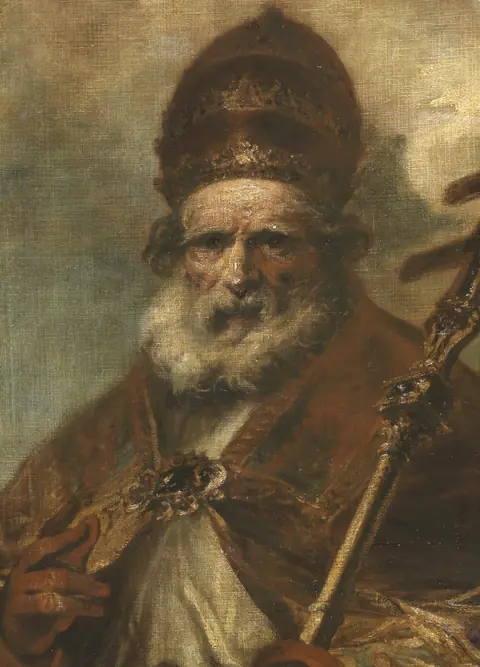
Saint Leo the Great was bishop (pope) of Rome from 440 to 461, one of the greatest of the early Roman pontiffs and a Doctor of the Church. He was among the foremost defenders of orthodox Christology against the teaching that Christ possessed only one nature.
A Roman cleric who had served as archdeacon, Leo was chosen bishop of Rome in 440. He worked vigorously to strengthen the authority of the Roman see and to suppress heresy, and he is especially remembered for confronting Attila the Hun in 452 and turning him back from invading Italy, and later restraining the Vandals.
His principal theological work is the Tome of Leo, the dogmatic letter to Flavian of Constantinople setting forth the two natures, divine and human, in the one Christ. It was acclaimed at the Fourth Ecumenical Council at Chalcedon in 451, which condemned Eutyches. He also left a substantial body of sermons and letters.
Leo died in 461 and was buried at Rome. He is venerated as a saint, and the Orthodox Church commemorates him on 18 February.